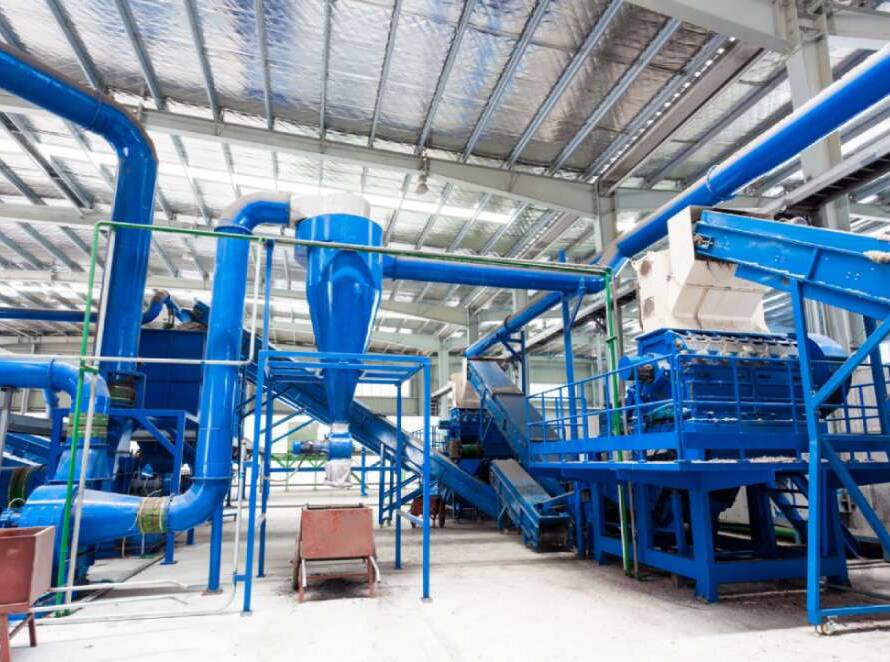
If you live anywhere near a sugar mill in western Kenya, you have probably driven past the bagasse pile at the back of the compound. Some of it gets burned as fuel inside the mill. A meaningful share doesn’t — and the surplus sits, dries out, and waits. Have you ever wondered what would happen if someone took that surplus seriously?
That is, in a way, what this article is about — but it is also about something bigger: the question of how an industrial business actually connects to the community it sits inside, and what makes that connection structural rather than charitable.
A product that cannot leave home
Most industrial products travel long distances before they reach a market. Cement is shipped across counties. Steel is shipped across countries. Briquettes do not work this way. The economics of trucking bulky, low-density biomass over long distance simply do not add up — you would burn most of your margin in diesel and tyres before you reached your customer.
So a briquette press goes to the feedstock, not the other way around. It sits near a sugar mill, near a rice paddy, near a sawmill. And once it sits there, it has no choice but to engage with whoever grows, mills, or moves that feedstock. The factory is not separated from the community by a fence and a security gate. The community is the upstream half of the business.
This is unusual. And it is the entire reason the cooperation question — how does a briquette factory benefit the community? — has a different answer from the standard CSR one.
The relationships that form
Think about what actually has to happen for a briquette to leave a factory.
Someone has to grow or mill the feedstock. Farmers who grow sugarcane, sugar mills that crush it, rice mills that hull paddy, sawmills that cut timber — they all suddenly have a buyer for material that used to be a disposal problem. Bagasse that used to sit and dry on the back of a compound has a price.
Someone has to move it. Local hauliers, often family-owned trucking businesses, get a steady contract. Drivers, mechanics, fuel vendors — a whole transport ecosystem comes alive on the strength of one supply route.
Someone has to make it. The workforce inside the plant is, by necessity, local. Around fifty positions in production, training, quality control, and maintenance. Many of these are first formal industrial jobs in households that have never had one. The training compounds — skills built by one worker carry across to the next.
Someone has to buy it. Industrial customers — tea factories, brick kilns, dairies — within driving distance get a fuel that does not require foreign exchange or imported shipping. Households nearby get a cleaner-burning option than charcoal.
And then there is the county. A serious facility becomes a county asset. The road that serves the plant serves everyone who uses the road. The grid connection that runs the plant runs the trading centre around it. The water infrastructure, when it gets built, supports the wider locality. Local government finds itself with a partner, not a beneficiary.
Have you noticed how every one of these is a contract or a relationship, not a donation? That is the point.
Kenya is already built for this
Here is what makes Kenya different from many places where briquette factories are now appearing. Kenya has one of Africa’s strongest cooperative traditions. KTDA’s seventy-plus smallholder tea factories. The sugar cooperatives of the western belt. The dairy cooperatives of Central and Rift Valley. The SACCO movement, which moves a meaningful share of household savings outside the formal banking system. Rural Kenya understands collective economic structures intuitively. Better, in fact, than most parts of the world.
A briquette facility maps almost perfectly onto this tradition. The community is not new to the model. Only the product is.
Speaking earlier this year at the Rotary District 9214 Conference and Assembly, Dr James Mwangi, Group Managing Director and CEO of Equity Group Holdings, made a related point about the kind of institution that lasts. The most resilient institutions, he said, are the ones that integrate social impact directly into their business models, rather than treating it as charity on the margins. That is exactly the test we would apply to any industrial business setting up in a Kenyan county. Is the community a feature of the business model, or a project on the side?
What this looks like at our facility
We have tried to build the business this way from the start.
Around fifty local employees, male and female, are being trained, educated, and hired to operate the production line and the in-house organic fertiliser processing. An on-site dispensary will offer free diagnosis and consultations, with medication at the lowest available rates and free for our employees. A canteen will serve nutritionally focused meals adapted to specific dietary needs. Households in the surrounding community will receive free briquettes for household cooking. Twenty smallholder farmers nearby will receive free organic fertiliser to test soil restoration on their own plots. Cattle fodder produced from rejected briquette material will return to the same farming network.
None of this is philanthropy. Every one of these is an investment in the structural health of the value chain we depend on. Healthier workers run a better line. Stronger nearby farms produce better feedstock and better soil. A community that benefits from the facility protects it.
In closing
A briquette factory is not just a business that happens to be in a community. The community is structurally inside the business. That is what makes it durable — and what makes it work.