By 2030, more Kenyans will live in cities than not. Nairobi keeps expanding outward into the satellite towns of Kiambu, Kajiado, and Machakos. Mombasa, Kisumu, Nakuru, Eldoret, Thika, and the Coast belt towns are growing in step.
Cities concentrate Kenya’s economy, its construction boom, its energy demand, its waste, and its opportunity. They also concentrate the resource flows where circular economy thinking either works at scale, or does not really work at all.
Cities consume around 75% of the world’s natural resources, produce around 70% of global CO₂ emissions, and occupy only about 3% of the land surface. The numbers have been quoted often enough that they sometimes lose their force, but the underlying point is straightforward: what happens in cities decides the planet’s resource footprint. And what happens in Kenyan cities decides Kenya’s.
What circular economy means at urban scale
The circular economy is not really about recycling, although recycling matters. It is about redesigning how a city’s resource flows work. Extending the lifecycle of products and buildings. Recovering organic waste rather than burying it. Treating one industry’s residue as another’s input. Using stormwater rather than fighting it. Reconnecting rural and urban resource flows so that what one needs, the other already produces. The point is to design the loops in, not to retrofit them later.
Five strategies sit at the heart of how this works for Kenyan cities.
Waste segregation and organic recovery
The first opportunity is sitting in plain sight. Most household and commercial waste in Kenyan cities is organic — food scraps, garden cuttings, market waste. The Dandora dumpsite has been receiving most of Nairobi’s daily waste, well over two thousand tonnes a day, for decades — and the majority of that is recoverable in principle. Around Nairobi, Mombasa, and the larger towns, a wave of formal and informal waste-to-resource ventures has been building over the past few years — composting, biogas generation, animal feed production, plastics recovery. The combination of source segregation by households and intermediate sorting by professional operators is what turns waste into raw material.
Industrial symbiosis in industrial parks
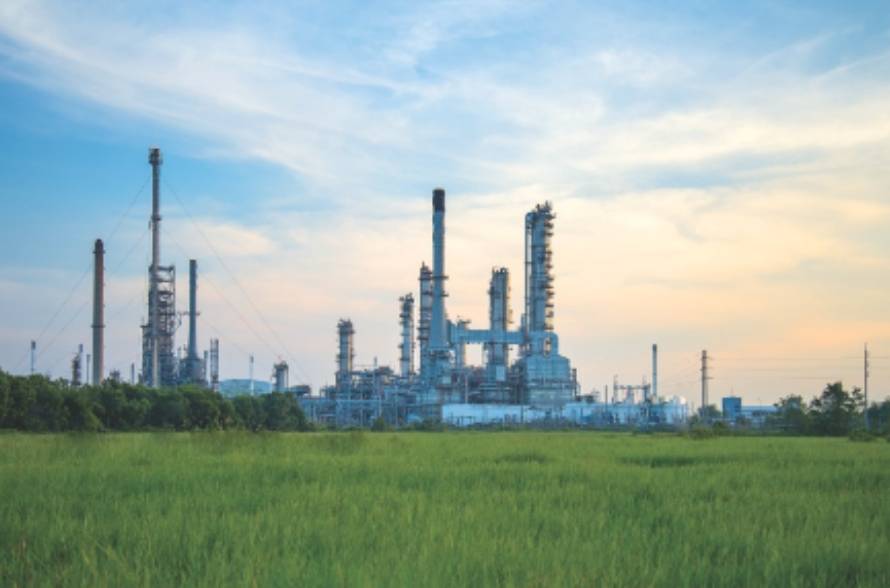
Kenya’s industrial parks and special economic zones — Athi River, Ruaraka, Tatu City, Konza Technopolis — are exactly the right scale for industrial symbiosis. When industries cluster, the waste heat from one process can supply another, the residue from one can feed another, the water from one can be reused by the next. Designing this in from the start is much easier than retrofitting it. Kenya’s newer industrial developments have the opportunity to build for symbiosis from day one, and to skip the retrofit problem entirely.
Urban greening and stormwater management
Nairobi floods every long-rain season. Embakasi, South C, parts of Eastleigh, Mathare — water sits on roads, in courtyards, in homes. Stormwater that should be soaking into the ground is running across tarmac into already overloaded drains. Bioswales — engineered shallow depressions planted with vegetation that slow rainwater, filter it, and let it percolate — work for exactly this. They are inexpensive, they double as urban green space, and they reduce the load on the drainage system. Kenya’s existing urban forestry tradition, from Karura to Ngong Road Forest to the planted boulevards of Nairobi’s older neighbourhoods, gives the country a head start on the broader greening question.
Green building and adaptive reuse
The construction boom in Nairobi and the other major cities has continued for over a decade with no real pause. The Kenya Green Building Society’s standards and the spread of EDGE-certified developments are a meaningful start, but the larger opportunity is in designing buildings so they can be disassembled at end-of-life — materials recovered rather than crushed into rubble. The country that builds this many buildings between now and 2040 has an unusual opportunity to set a new standard for how a city’s built fabric is grown, and unmade.
The rural-urban resource flow
Kenyan cities consume. The food they eat, the fuel their industries burn, the materials their buildings use — almost all of it comes from outside the city, from the rural counties that feed them. Reconnecting those flows is part of circular thinking at country scale. Industrial biomass briquettes produced near the feedstock in western Kenya, for instance, can fuel industrial boilers in Nairobi without the country burning foreign exchange on imported coal or heavy fuel oil. Food waste leaving cities can fertilise the farms that supply them. The loops between countryside and city are the largest ones in any national economy — and they are the ones with the most to gain from circular design.
What this requires
None of this happens by accident. It requires system thinking rather than strategy thinking. It requires investment, policy, partnerships, and capacity all at once. Counties have to lead — Nairobi, Mombasa, Kisumu, Nakuru, and the others — but they cannot lead alone. The private sector has to design for circularity from the start, not retrofit it.
Speaking in Kisumu in October 2025, Anaclaudia Rossbach, United Nations Under-Secretary-General and UN-Habitat Executive Director, made the point cleanly: “No single entity can solve this challenge alone. Partnerships, co-creation, and local leadership are key to building the sustainable cities Africa needs.” The Kenyan version of that sentence is even more direct: counties, the private sector, civil society, the informal economy, and the residents themselves have to design the loops together.
In closing
Cities that get circular right will be more livable, more prosperous, more resilient. The question is not whether Kenyan cities will adopt circular economy. The question is how fast, and led by whom.